Use Case 01
Building a scalable Design Operations Model
A DesignOps initiative to make quality repeatable across teams: clearer documentation, stronger handoff, shared standards, and an operating model that helps design scale without losing craft.
The challenge
As the design organization scaled across projects, teams, and delivery contexts, the same work was being documented, structured, and handed off in different ways. That created friction: uneven documentation quality, unclear implementation readiness, inconsistent edge-case coverage, and too much dependency on individual team habits. The challenge was not to add more process. It was to design a practical system that could raise the quality bar while remaining flexible enough for real delivery.
The goal
The objective was to create a shared design operating model that made high-quality, implementation-ready design easier to produce, review, maintain, and onboard into. It needed to reduce ambiguity for designers, product partners, and engineers, while creating a clearer definition of what “good” looked like across the business.
Operating model
Shared file architecture, naming conventions, project states, workflow signals, and reusable templates.
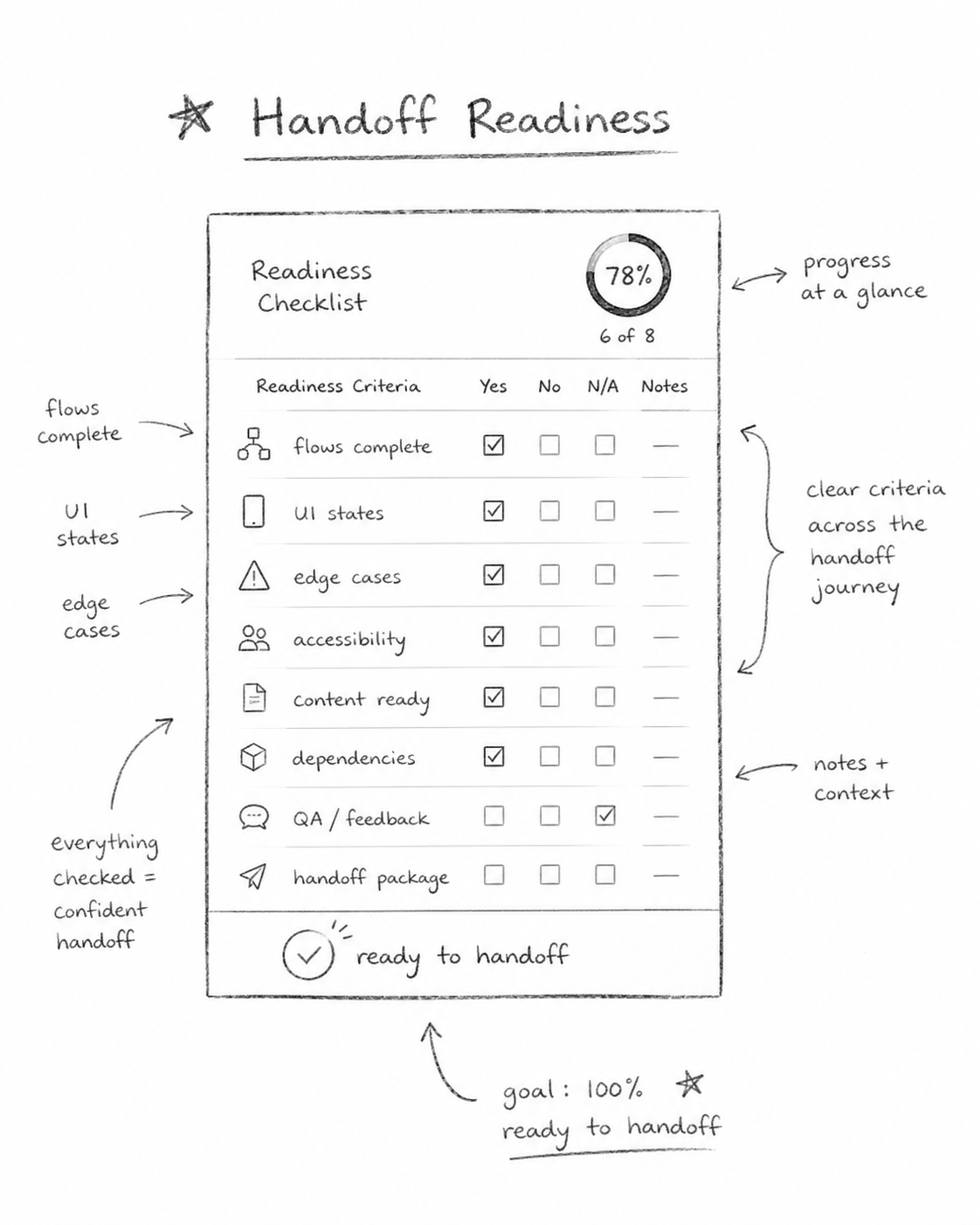
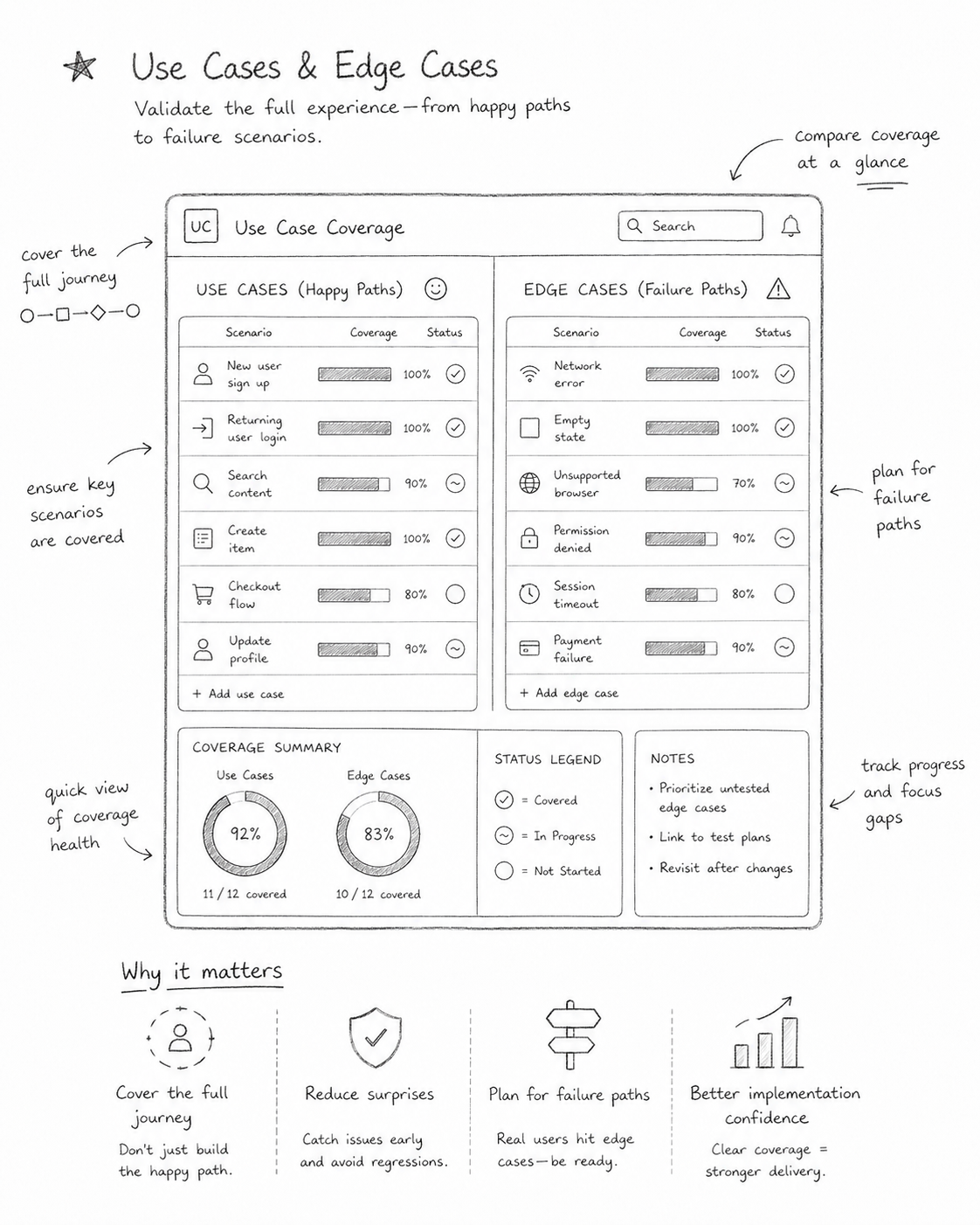
Quality criteria for documentation maturity, use-case coverage, edge cases, IA clarity, and handoff readiness.
Review rituals, decision checkpoints, Confluence resources, onboarding guidance, and adoption support.
What I introduced
- A clearer quality bar for documentation, handoff readiness, use-case coverage, and implementation readiness.
- Reusable templates and shared file structures that made the preferred way of working easier to follow.
- Guidance for communicating design intent: ownership, status, decisions, flows, and edge cases.
- A quality metric to assess documentation maturity and implementation fidelity against the design source of truth.
Process
The work started by identifying recurring friction points in live projects: documentation gaps, unclear handoff readiness, inconsistent file organization, and difficulty navigating design decisions across teams. I translated those patterns into a structured framework of standards, templates, guidance, and quality signals. Because DesignOps only works when it is adopted, rollout focused on stakeholder alignment, real workflow integration, and iteration based on feedback and usage.
Constraints
The main tension was consistency versus flexibility. The model had to reduce ambiguity without becoming rigid or burdensome. It needed to support different project contexts while still creating a shared baseline. That meant treating operational design like a product: useful, adoptable, measurable, and capable of evolving over time.
The initiative moved design delivery away from project-by-project habits and toward a more intentional operating model. It improved handoff quality, documentation maturity, onboarding, project rotation, and cross-functional clarity. More importantly, it positioned design as a function capable of building the systems, governance, and quality mechanisms needed to scale effectively.
This case reflects design leadership beyond interface output: the ability to identify systemic delivery problems, design operational solutions, align teams around shared standards, and create frameworks that make high-quality work more consistent and sustainable over time.